The Pipe That Goes Where Carbon Steel Can't: ASTM A335 in Real Industrial Applications
Carbon steel handles most piping applications well enough. It’s inexpensive, widely available, easy to fabricate, and covers a broad range of service conditions. But there’s a category of industrial environments where carbon steel reaches its limits before the process conditions do — where the temperatures are high enough or the thermal cycling severe enough that standard carbon steel pipe either loses too much strength or degrades too quickly to be reliable. That’s where alloy steel pipe comes in, and specifically where ASTM A335 defines what “alloy steel pipe for high-temperature service” actually means.
The standard isn’t abstract. It applies to real equipment in real plants, and understanding which grade goes where and why clarifies decisions that otherwise get made on incomplete information.
What ASTM A335 actually specifies
ASTM A335 covers seamless ferritic alloy steel pipe for high-temperature service. The standard defines multiple grades — P1, P2, P5, P9, P11, P12, P22, P91, P92, and others — each with a specific chemical composition that determines the pipe’s mechanical properties at elevated temperature.
The grade designations refer to alloy content. P11 contains 1–1.25% chromium and 0.44–0.65% molybdenum. P22 contains 2–2.5% chromium and 0.87–1.13% molybdenum. P91, one of the higher-grade materials in the standard, contains 8–9.5% chromium with additional molybdenum, vanadium, and niobium — a composition that gives it significantly higher creep strength than the lower-chromium grades.
The chromium content drives oxidation resistance at elevated temperatures. The molybdenum content contributes to creep resistance, which is the resistance to slow deformation under sustained load at high temperature. Both properties matter in high-temperature process piping, where the pipe is under pressure for years at a time at temperatures that would cause carbon steel to deform progressively.
Where the temperature limits actually fall
Carbon steel pipe in continuous service is generally considered suitable to around 425°C (800°F), depending on the specific grade and the service conditions. Above that threshold, creep becomes a meaningful factor — the steel will slowly deform under sustained stress, which in a pressurized pipe means the wall gets thinner over time and the pipe eventually fails.
The lower chromium-molybdenum grades in ASTM A335, like P11 and P12, extend the practical service range to around 550°C (1020°F). The higher-chromium grades like P22 push that further. P91 and P92 are designed for service at 600°C and above — they’re used in the hottest sections of power plant boilers and steam lines where the thermodynamic efficiency gain from running higher temperatures justifies the material cost and the more demanding fabrication requirements.
The temperature limits aren’t just about strength. Oxidation — the reaction between the pipe surface and oxygen or steam at high temperature — degrades pipe walls over time. The chromium content in alloy pipe grades forms a protective oxide layer that dramatically slows this degradation. Carbon steel exposed to steam at 600°C would oxidize quickly; P91 at the same temperature forms a stable chromium oxide scale that protects the base metal.
The applications that drive demand for ASTM A335
Power generation accounts for a large share of ASTM A335 usage. Conventional coal and gas turbine plants, as well as nuclear plants, use alloy steel pipe extensively in the main steam circuits, reheat piping, and feed water heating systems. The steam temperatures in modern supercritical and ultra-supercritical power plants specifically require the higher-grade P91 and P92 materials — the efficiency improvements from running at higher temperatures are only achievable because these materials can handle conditions that would destroy conventional steel pipe within months.
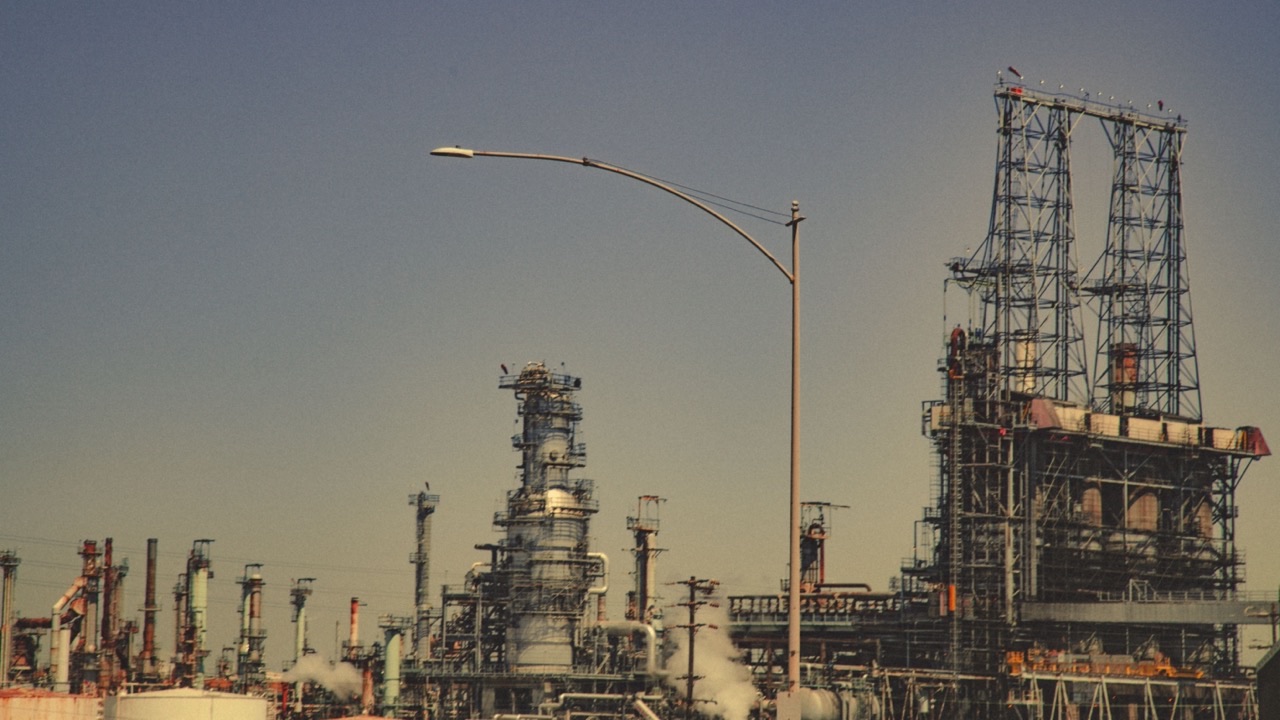
Petroleum refining is another major application area. Fired heaters, hydrotreater units, and catalytic reformers all involve process streams at temperatures and pressures that require alloy materials. The hydrogen service conditions in some refining units add an additional requirement: at elevated temperatures and pressures, hydrogen can diffuse into steel and cause hydrogen embrittlement or hydrogen-induced cracking. The molybdenum content in A335 grades contributes to resistance to this mechanism.
Chemical processing plants use ASTM A335 alloy steel pipe in reactors, heat exchangers, and high-temperature transfer lines. The specific grade selection depends on the process fluid, the operating temperature, and the cycling behavior — a system that operates at steady state can sometimes use a different grade than one that undergoes frequent thermal cycling, because the fatigue behavior under temperature swings differs from behavior under sustained load.
Why grade selection matters more than the standard itself
Specifying ASTM A335 without a grade designation is not a complete specification. The standard covers materials with dramatically different properties — P1 has roughly similar chromium content to carbon steel and provides only modest improvement over standard pipe; P91 has nine times the chromium content and operates at temperatures P1 cannot tolerate. Both are ASTM A335, but they’re not interchangeable.
The grade selection should come from the design conditions: operating temperature, design pressure, fluid chemistry, and the cyclic or steady-state nature of the service. For most high-temperature steam applications in the 540–565°C range, P22 has been a standard choice for decades. For applications above that range, P91 has become the standard, though it requires careful attention to welding procedures and post-weld heat treatment because its hardened weld zone can crack if the heat treatment isn’t done correctly.
This fabrication requirement is one of the less obvious practical differences between alloy pipe grades. P11 and P22 are considered relatively forgiving to weld; P91 has a narrower window for preheat, interpass temperature, and post-weld heat treatment, and welds that fall outside that window have failed in service. Specifying P91 on a project requires confirming that the fabricator understands and can execute the required welding procedure, and that the heat treatment is tracked and documented for each joint.
What procurement requires
For ASTM A335 pipe, the mill certificate documents more than the basic material properties. For P91 specifically, industry practice has evolved toward requiring additional certification of the heat treatment applied during manufacturing, the actual chemical composition of the heat (not just nominal ranges), and in some cases third-party verification of the mechanical testing. This elevated documentation requirement reflects field experience with P91 failures that were traced back to material that met the stated grade designation but had composition at the edge of the allowed range in ways that affected long-term performance.
The traceability requirement for high-temperature alloy pipe is higher than for structural materials because the consequences of material underperformance in a pressurized high-temperature system are severe. Specifying and verifying the correct grade, from a manufacturer with documented quality systems, is the baseline for managing that risk.
Carbon steel handles most of what industrial piping requires. When it doesn’t, ASTM A335 defines what comes next — and the grade designations within the standard are the difference between a material that works in the application and one that merely looks like it should.